
10 Modern Cafe Design Ideas Customers Will Fall in Love With

Some cafés are made for a quick caffeine fix. Others make you want to order another cappuccino, grab one more boba tea, or settle into a comfy seat and forget about your to-do list for a while. What makes the difference? Often, it is the atmosphere. A well-designed space can turn an everyday coffee or tea stop into a little experience, giving customers a reason to linger, come back, and bring their friends along.
Mindful Design Consulting’s past and present projects are a long-running showcase of creative ways to put modern café design trends to work and do just that. We like mixing good looks with comfort and a healthy dose of practical thinking, creating spaces where customers come for the coffee, tea, or treats but stay for the atmosphere. Comfy seating, smart layouts, and employee-friendly workspaces are all part of the mix, along with those little unexpected extras that make a place feel completely one of a kind, with its own unmistakable vibe.
Here are some of our favorite design ideas in action.

Bobaroma boba tea shop, Sarnia, Ontario. Designed by Mindful Design Consulting.
1. Texture That Gives Character
Nobody gets excited about a sea of plain surfaces. Of course, smooth, plain surfaces have their place, but mix in a few different textures and a café interior really comes to life. Wood, textured tiles, ribbed panels, and tactile upholstery bring depth to a space and give the eye plenty to explore. Visual boredom is a real affliction, and we are all for keeping it at bay.
A counter wrapped in narrow, fluted wood strips, a wall dressed in tiles with a raised pattern, or cozy, velvet-like seating against a smooth painted wall can add a whole new dimension to the interior. Even a relatively simple color palette can feel rich when different materials bring their own finishes and surface details. Different textures can play off each other, creating little contrasts that make the whole space more fun to explore.
Texture also sets the mood and tells customers what to expect. Natural wood and soft fabrics make a café feel warm and relaxed, while polished metal and glossy tiles give it a contemporary, cool edge. For a playful dessert café, colorful tiles in unexpected patterns can turn an ordinary wall or counter into a real standout feature.
In the end, it is all about layering and details. Part of the pleasure of visiting a café is taking in the space, unwrapping little details, and feeling surrounded by beauty that can be slowly enjoyed.
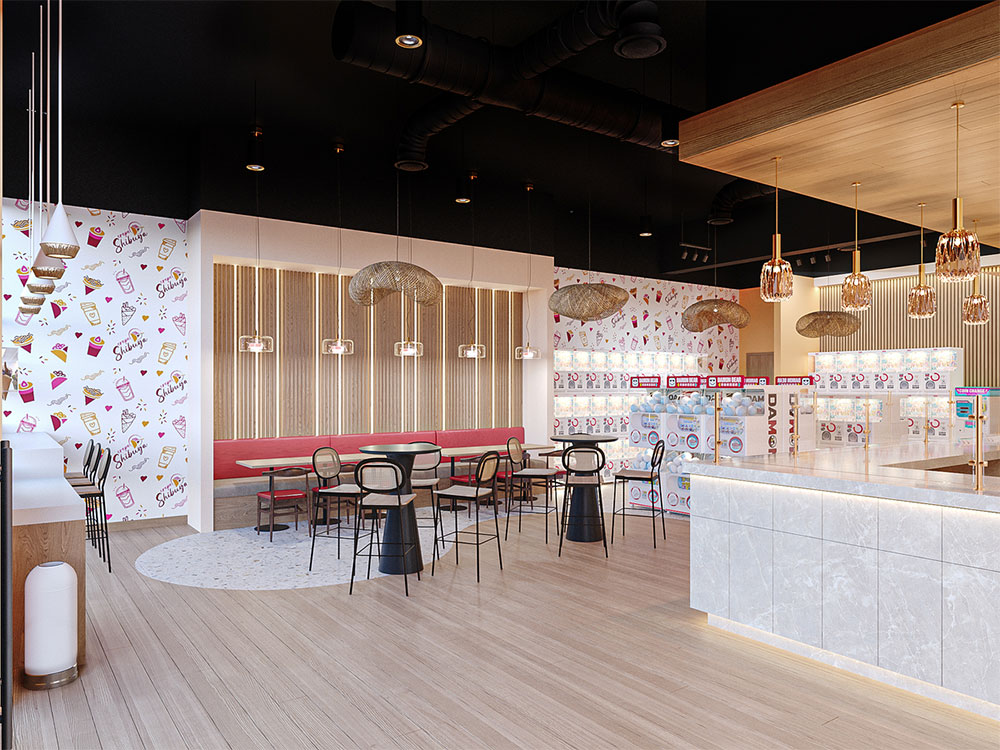
Crepe Shibuya Japanese dessert store design by Mindful Design Consulting.
2. Statement Counters for Bold First Impressions
The service counter is one of the hardest-working features in a café, but it can also be one of its biggest design attractions. Customers often approach it first, spend time looking at the menu and displays, and interact with employees there. Its design plays a big part in the first impression the café makes.
Curved counters, unusual silhouettes, colorful fronts, decorative tilework, and contrasting materials can turn this functional feature into a focal point. A sweeping curved counter or one with bold angles, layered shapes, or a colorful patterned front can become a design feature in its own right. The countertop offers another opportunity to play with materials, with natural stone, terrazzo, quartz, and colorful laminate adding their own patterns, colors, and character.
The space above the counter deserves attention, too. A well-designed soffit can frame the service area and make the whole zone feel more special. Integrated lighting, decorative details, and interesting shapes can bring even more character to the area.
Of course, appearance is only part of the equation. The counter needs enough room for ordering, payment, equipment, food preparation, and pickup. Its height and configuration should also work for both employees and customers. A beautiful counter is even better when it works just as well for the people behind it as for the customers in front of it.

A curved counter, contrasting colors, ribbed panels, and bold soffits make a bold first impression in Leafly Boba Bar design by Mindful Design Consulting.
3. Seating Designed for Lingering
A customer who comes in for a quick coffee may leave within minutes. Someone meeting a friend, working on a laptop, or enjoying a leisurely afternoon might stay for an hour or more. A well-planned café makes room for all these different visits, with a variety of seating options to suit different needs and moods. Upholstered banquettes, intimate two-person tables, comfortable lounge chairs, communal tables, and window seats all offer their own way to enjoy the space.
A cafe should never miss an opportunity to make customers want to linger. Comfortable seating, cozy upholstery, supportive chairs, and enough room to settle in can turn a quick coffee stop into a much longer visit. That extra time might mean another cappuccino, an additional dessert, a good conversation, or simply a chance to settle in, soak up the atmosphere, and let the afternoon unfold. Those are the moments that turn a café stop into a favorite little ritual customers look forward to repeating.
The arrangement should reflect how customers use the café. Remote workers appreciate accessible power outlets and comfortable chairs, while groups and families may need larger tables. Seat depth, back support, table height, and enough distance between chairs all matter, too. Customers should have room to settle in, while employees need enough space to serve tables and move around comfortably.

Deeply upholstered bench in a cozy nook attracts attention with its bright color and invites customers to stay a little longer. Bobaroma boba tea store, Georgetown, Ontario. By Mindful Design Consulting.
4. Greenery for a Fresh, Welcoming Feel
Plants can work wonders in a café interior. They bring in organic shapes, soften all those hard surfaces and straight lines, and make a space feel more relaxed and inviting. Even a handful of well-placed plants can give a café a whole new feel.
A potted tree can turn an empty corner into a cozy spot, smaller plants can perk up shelves and counters, and hanging greenery can bring an otherwise bare ceiling area to life. A green wall can make a fabulous backdrop for a seating area or create a memorable first impression near the entrance. Short on floor space? Wall-mounted planters are another way to get some greenery into the mix.
Plants can also play along with the café’s concept. A juice bar might pair leafy greenery with natural wood to bring its fresh-ingredient theme to life. A bakery could dress up its tables with delicate branches in ceramic vases, while a tropical-inspired café can go all in with oversized leaves and lush arrangements.
Of course, real plants come with a few strings attached. Lighting conditions, watering, maintenance, and customer traffic all need to be considered. High-quality faux greenery can be a great alternative for windowless spaces, awkward corners, or spots where live plants would have a hard time surviving.
The important thing is to give greenery a proper place in the design. A statement tree, a beautiful arrangement, or a well-placed green wall can do far more for a café than a dozen little pots scattered wherever there is room.

Green selfie wall and integrated greenery in Sunny Scoop ice cream and waffle shop design by Mindful Design Consulting.
5. Statement Lighting That Sets the Mood
Lighting has a remarkable influence on how customers perceive a café. It can make a space feel cozy and intimate, bright and energetic, or sophisticated and relaxed. It also highlights the interior features you want customers to notice. A cluster of oversized pendants, a sculptural chandelier, or a quirky floor lamp can give a café just as much character as its furniture or wall finishes. Lighting fixtures are an opportunity to have some fun with the design.
Decorative pendant lights above tables are a popular choice, especially when several fixtures are grouped together. Oversized pendants can make a strong statement, while smaller ones arranged in a row or cluster add rhythm to the space. The service counter deserves a special lighting treatment, too. A row of pendants, bold decorative fixtures, or integrated lighting can make it stand out and draw customers toward the menu and display area. Wall sconces add another layer of light and make seating areas feel more intimate.
There is plenty of room to experiment with sculptural chandeliers, unusual floor lamps, colorful shades, and artistic designs. A distinctive fixture can become a memorable feature and give a café its own visual signature.
The best results come from layering different types of lighting. General lighting brightens the overall space, task lighting provides practical illumination around the counter and preparation areas, and accent lighting highlights artwork, architectural details, and decorative features. Dimmers make it easy to shift the mood throughout the day, from bright morning coffee service to a more relaxed evening setting.
Natural light deserves a place in the mix, too. Large windows make a café feel open and inviting, while seating arranged near them lets customers enjoy the daylight and the view.

Layered lighting featuring LED lights and neon signs at Mango Bliss Dessert Bar design by Mindful Design Consulting.
6. Branding Woven Into the Interior
A café can have beautiful furniture, attractive finishes, and impressive lighting, but what makes it recognizable? Often, it is the way its brand identity carries through the entire space. The interior becomes an extension of the brand, giving customers a feel for its personality before they even place an order.
Branding goes far beyond placing a logo on the wall. It can influence the color palette, furniture finishes, materials, graphics, signage, and even the shapes of custom design features. For example, a playful brand might come to life through bold colors, oversized lettering, and graphic patterns, while a more refined coffee shop might use natural materials, understated colors, and elegant typography. These choices should reflect the brand and the experience it wants to create.
Wall graphics and murals are great ways to bring a brand story into the space. A logo can inspire a decorative wall feature, a signature pattern can appear on wallpaper or upholstery, and brand colors can pop up on the counter, seating, and signage. Even smaller details, such as menu boards, takeaway cup displays, and custom packaging, can help tie everything together.
When branding and interior design work hand in hand, the result feels cohesive and unmistakably its own. Customers experience the brand throughout the space, and those recognizable details can make the café stick in their minds long after the last sip.
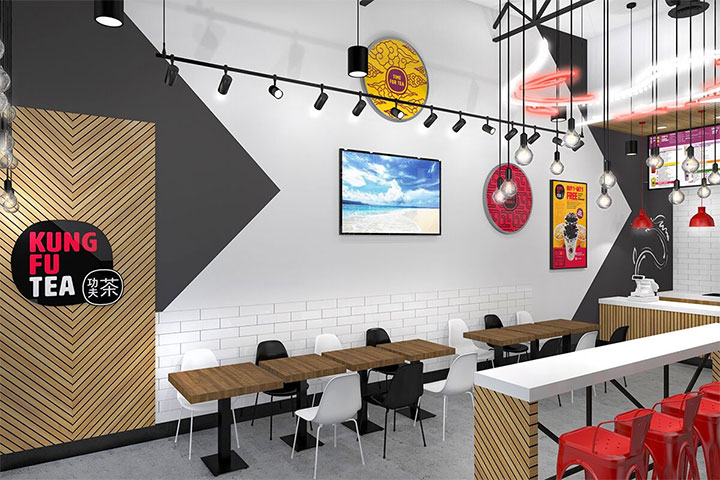
Brand colors integrated into the design. Kung Fu Boba Tea café design by MIndful Design Consulting.
7. Instagrammable Corners and Selfie Walls
Some café features are just begging to be photographed. A colorful mural of oversized flowers, a neon sign with a playful phrase, or a mirror framed by sculptural shapes can quickly become a favorite spot for customers to snap a picture. These photo-worthy details add a bit of fun to the café experience and give people something to share with their friends and followers.
A selfie wall does not have to be a standard backdrop with a logo slapped on it. It could feature lush greenery with oversized lettering, a three-dimensional flower installation, a bold geometric pattern, or a colorful arrangement of decorative shapes. The more distinctive the backdrop, the more likely customers are to remember it. Even a quirky bench or a cozy corner with an interesting backdrop can become a popular place to take photos.
There is a bonus: these features do more than look good. They give the café extra exposure when customers share their photos online. A memorable photo spot can even become part of the brand, making people recognize the café just from one picture.

Hanging swing set against a green wall, with a neon-sign logo, creates a perfect selfie spot at Mango Bliss Dessert Bar by Mindful Design Consulting.
8. Ceilings as Design Landscapes
The fun does not need to happen all at eye level. The ceiling is a huge part of a café interior, and leaving it plain means missing out on a whole lot of design possibilities. More cafés are turning this often-overlooked surface into a feature worth looking up for.
Wooden slats, decorative panels, bold colors, and geometric patterns can all give a ceiling plenty of character. Hanging greenery can create a leafy canopy, while sculptural installations and unusual lighting fixtures add interest overhead. For something more architectural, curved soffits and layered ceiling elements can create a landscape of shapes, depth, and changing heights. Even a change in color or finish can help define a seating area or draw the eye toward the counter.
A creative ceiling can pull the whole look together, reinforce the café’s theme, or add an unexpected surprise to the space. Sometimes, an overhead detail can become the feature customers remember most.

Layered ceiling landscape in Hey!FroYo frozen dessert shop, designed by Mindful Design Consulting.
9. Bold Murals and Artistic Wall Features
A plain wall leaves plenty of creative potential untapped. Large-scale murals, hand-painted illustrations, abstract shapes, and oversized botanical designs turn ordinary surfaces into memorable features. They bring color, movement, and a strong visual identity to a café.
Murals also offer a way to express the café’s concept. A coffee shop might feature oversized coffee-inspired illustrations, while a tropical juice bar could go for lush leaves and playful fruit motifs. A dessert café might take a more whimsical direction with oversized flowers, colorful shapes, or imaginative characters. The artwork might cover an entire wall, frame a seating area, or sit behind the counter as a bold backdrop.
Different styles create different moods. A bold abstract composition adds energy to a contemporary café, while a detailed hand-painted scene gives the space an artistic, one-of-a-kind feel. Even a limited color palette makes an impression when paired with expressive shapes and an interesting composition.
Murals also make natural photo backdrops. Customers may come for the coffee and treats, but a memorable wall gives them another reason to take a picture and share the café with others.

Bold murals featured on the main wall at Leafly Boba Bar by Mindful Design Consulting.
10. Smarter Layout
A gorgeous interior will only go so far if customers keep bumping into each other or employees struggle to prepare orders. A good café layout makes the space comfortable for guests and practical for the people working behind the counter.
The customer journey should feel easy from the moment someone walks in. The entrance, menu, ordering counter, payment point, and pickup area should work together, with enough room for waiting customers without blocking doorways, queues, or seating areas. Even the placement of water, napkins, and condiments affects how people move through the café.
Behind the counter, baristas need convenient access to equipment, ingredients, refrigerators, sinks, storage, and preparation surfaces. Logical work routes save unnecessary steps, especially during busy periods.
Seating needs breathing room, too. Customers should have space to pull out chairs, move between tables, and enjoy their visit without feeling cramped. At the same time, employees need clear paths to serve guests and carry orders.
A successful layout balances customer comfort, employee efficiency, accessibility, and the practical needs of the business. Getting these details right early makes a big difference once the café opens.

Smart layout ensures smooth traffic flow in Batch 3 Ice Cream store, designed by Mindful Design Consulting.
Mindful Design Consulting is a commercial interior design and branding studio specializing in franchise and multi-location brand expansion. We help growing brands create scalable, consistent, and emotionally engaging environments rooted in the psychology of design. Our work goes beyond aesthetics. We design spaces that influence how customers feel, behave, and connect with a brand.
If you are thinking to open a new business or are in the process of rebranding and remodeling your existing business, contact us to get a free consultation from Mindful Design Consulting. Click HERE to price your project design.
Also, take a look at the “Branding By Interior” e-book, the only book written on this subject at this time. It brings insight into how you can turn your business into a market-dominating competitor by using human cognitive responses.
See our Small Store Design Extravaganza: Commercial Interior Design and Branding 01 book about branding small businesses from logo design to construction, with colorful images, offering insightful explanations every step of the way.