
10 Eco-Friendly Design Materials for Small Retail Store Interiors

In today’s retail landscape, sustainability is more than just a buzzword—it’s a commitment that resonates deeply with consumers and can significantly impact a brand’s reputation. For small retail store owners, incorporating eco-friendly design materials into store interiors is an excellent way to demonstrate this commitment. Not only does it appeal to environmentally conscious customers, but it also contributes to their well-being. So, what are some of the best eco-friendly design materials you should consider for your retail store interior?

1. Reclaimed Wood
Reclaimed wood is a popular choice for sustainable interiors. Sourced from old barns, factories and warehouses, it offers a unique, rustic aesthetic that adds character to your store. Reusing this wood reduces the need for new timber, thus preserving forests and reducing waste. It’s ideal for flooring, shelving and even decorative wall panels.

2. Bamboo
Bamboo is one of the most sustainable eco-friendly design materials available. It grows rapidly, often reaching maturity in just three to five years, and requires minimal water and no pesticides. Its durability and versatility make it perfect for flooring, countertops and even display fixtures. Furniture, accent pieces and lighting can greatly benefit from the use of this material. Additionally, bamboo’s natural appearance can bring a warm, inviting feel to your store.

Flexible Bamboo Pendant Light from OrientalBazar on Etsy
3. Rattan
Rattan is a highly sustainable material derived from the rattan plant, a type of vine that grows rapidly in tropical regions. Its flexibility and strength make it an ideal choice for a variety of furniture and decor items, including chairs, tables, baskets and lighting fixtures. Rattan is lightweight yet durable, and its natural, earthy appearance can bring a familiar feel to your retail space. Rattan lighting fixtures, such as pendant lights and lampshades, add an organic touch while providing functional and stylish illumination. Additionally, using rattan supports sustainable harvesting practices and promotes the livelihoods of communities that cultivate and process this versatile material.

Flora Rattan Pendant from Pottery Barn
4. Cork
Cork is harvested from the bark of cork oak trees, which regenerate their bark after harvesting, making it a renewable resource. This material is not only eco-friendly but also hypoallergenic, resistant to mold and mildew, and provides excellent thermal and acoustic insulation. Cork tiles can be used for flooring, wall coverings and even decorative accents.

Cork board panels in a small office at the back of a dessert store. Sift Dessert Bar by Mindful Design Consulting.
5. Recycled Metal
Incorporating recycled metal into your store’s design can give it a modern, industrial look. Metals such as steel and aluminum can be recycled repeatedly without losing their strength or durability. Recycled metal can be used for shelving, fixtures and even signage, adding a sleek, contemporary touch to your store.
6. Recycled Glass
Recycled glass is an innovative and sustainable material that can add a unique touch to your store’s interior. By repurposing glass from old bottles and windows, manufacturers create beautiful, durable surfaces suitable for countertops, tiles and decorative accents. Recycled glass is available in a wide range of colors and patterns, allowing you to customize the look of your store. Its reflective properties can enhance natural light within the space, making it feel brighter and more inviting. Incorporating recycled glass not only reduces waste but also supports the circular economy by giving new life to materials that would otherwise end up in landfills.
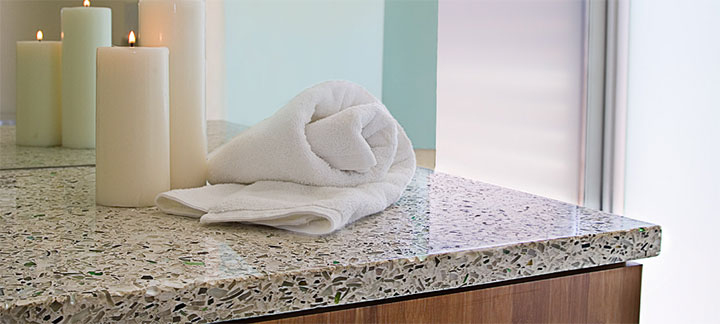
Glass House recycled glass by Vetrazzo
7. Natural Paints and Finishes
Traditional paints and finishes often contain volatile organic compounds (VOCs) that can harm indoor air quality. Opting for natural, low-VOC or VOC-free paints and finishes is a healthier choice for both the environment and your customers. These products are made from natural ingredients like plant oils, clay and chalk, and come in a wide range of colors and finishes to suit all design aesthetics.

8. Organic Textiles
For store interiors that feature fabric elements such as curtains, upholstery or display materials, choosing organic textiles is a sustainable option. Organic cotton, linen and hemp are grown without harmful pesticides and synthetic fertilizers, which makes them a healthier choice for the environment and for people. These textiles can add a soft, natural feel to your store, enhancing the overall shopping experience.

Wales Natural Rug by Jaipur Living for Burke Decor – 60 percent wool, 40 percent jute
9. Upcycled Furniture and Decor
Upcycling involves repurposing old or discarded items into new, functional pieces. This approach not only reduces waste but also gives your store a unique, eclectic style. Scour thrift stores, flea markets, and online marketplaces for vintage furniture and decor items that can be revamped with a bit of creativity and elbow grease.

10. LED Lighting
Lighting is a crucial aspect of any retail space, and choosing eco-friendly options can significantly reduce your energy consumption. LED lights are highly energy-efficient, consuming up to 80% less energy than traditional incandescent bulbs and lasting much longer. They are available in a variety of styles and colors, allowing you to create the perfect ambiance for your store.

La Belle Étoile by SLAMP from LUXE Design
If you are thinking to open a new business or are in the process of rebranding and remodeling your existing business, contact us to get a free consultation from Mindful Design Consulting. Click HERE to price your project design.
Also, take a look at the “Branding By Interior” e-book, the only book written on this subject at this time. It brings insight into how you can turn your business into a market-dominating competitor by using human cognitive responses.
See our Small Store Design Extravaganza: Commercial Interior Design and Branding 01 book about branding small businesses from logo design to construction, with colorful images, offering insightful explanations every step of the way.





Leave a Reply
Want to join the discussion?Feel free to contribute!