
Restaurant Acoustics – The Hidden Factor Behind Customer Experience

Restaurant owners usually focus on great menus and beautiful interiors. While those matter, guests often notice something else first: how the space feels to be in.
Think about the last time you went out for a meal and ended up raising your voice just to hold a conversation. Even if the food was excellent, the experience probably felt more tiring than enjoyable.
Restaurant acoustics play a quiet but powerful role in shaping that experience. Modern restaurant design often leans on hard materials like glass, concrete, and open kitchens, which reflect sound and quickly increase overall noise levels. These design choices can make a space look stunning, but once it gets busy, they also make it much harder to hear and connect.
No longer a mere architectural afterthought, managing volume is a critical operational priority. It has become a core part of how a restaurant functions and how guests experience the space.

Pichudo restaurant design by Mindful Design Consulting. The acoustic baffles help control sound while adding to the overall aesthetic.
What Are Restaurant Acoustics?
Restaurant acoustics are about much more than controlling noise. They determine how sound travels through the dining room, how much of it bounces off hard surfaces, and how much is absorbed.
When the acoustics are right, customers can carry on a conversation without raising their voices, hear their server clearly, enjoy the background music, and relax over a meal.
When they are not, the opposite happens. Conversations compete with one another, noise builds throughout the service, and what should have been a pleasant dining experience quickly becomes loud, stressful, and exhausting.
Common Causes of Poor Restaurant Acoustics
Poor acoustics rarely come from a single source. More often, they are the result of several design decisions working together. Many of the materials and layouts that make restaurants look modern can also make them much louder if sound is not considered during the design process.
| Common Cause | Impact on Noise |
|---|---|
| Concrete floors | Reflect sound |
| Glass walls | Increase echo |
| High ceilings | Extend sound travel |
| Open kitchens | Add operational noise |
| Large dining rooms | Amplify conversations |
| Hard furniture surfaces | Reduce sound absorption |
There is nothing inherently wrong with any of these design features. The problem arises when too many reflective surfaces are combined without enough materials to absorb sound. The result can be a beautiful restaurant that feels stressful and overwhelming once it gets busy.

Pichudo restaurant design by Mindful Design Consulting.
Why Noise Can Make or Break the Customer Experience
People go out to eat for more than just the food. They want good conversation, a welcoming atmosphere, and an enjoyable dining experience from beginning to end. Excessive noise can quickly take away from all of that, making even a great meal feel less enjoyable.
The difference becomes clear when you compare the two environments side by side.
| Comfortable Acoustic Environment | Excessively Noisy Environment |
|---|---|
| Easy conversations | Repeating yourself over and over |
| Relaxed atmosphere | Mental fatigue |
| Longer stays | Frustration |
| Positive memories | Leaving sooner than planned |
The tricky part is that most customers will never say, “The acoustics were bad.” Instead, they leave feeling that the restaurant was loud, stressful, or overwhelming. Many will mention it in an online review without ever realizing that poor acoustics were the real cause.

Camino Farms Market with an attached restaurant, University of California San Diego campus. By Mindful Design Consulting. Example of acoustic baffles integrated into the design.
How Poor Acoustics Affect Staff Performance
Restaurant acoustics do not just affect customers. Employees spend hours working in these environments every day, making them even more vulnerable to excessive noise.
When a restaurant becomes too loud, communication between servers, bartenders, cooks, and managers becomes more difficult. Instructions have to be repeated, mistakes become more likely, and even routine tasks require more effort and concentration.
Over time, constant exposure to high noise levels can increase stress, reduce focus, contribute to hearing-related risks, and make communication more challenging. For restaurants that rely on teamwork and clear verbal communication, these issues can affect both employee wellbeing and day-to-day operations.
That is why many businesses carry out workplace noise assessments. Measuring employee noise exposure helps identify potential problems early, allowing owners to introduce effective sound-control measures before noise begins to affect staff performance, safety, and wellbeing.
According to NOVA Acoustics, a UK acoustic consultancy specializing in workplace noise surveys and assessments, measuring workplace noise exposure makes it easier to identify risks early and put the right solutions in place before they become bigger problems.

Camino Farms Market with an attached restaurant, University of California San Diego campus. By Mindful Design Consulting.
Why Restaurant Acoustics Matter More Today
Restaurant acoustics have always been important, but they matter even more today than they did a decade ago.
Modern restaurants often feature open layouts, soaring ceilings, polished concrete floors, and large glass walls. While these design elements create beautiful spaces, they also reflect sound and make it much harder to control noise.
At the same time, customers are quick to share their dining experiences online. A restaurant that is too loud can leave guests feeling frustrated, leading to reviews that describe the space as stressful or overwhelming, even if the food and service were excellent.
Accessibility is another growing consideration. Loud dining rooms can be especially challenging for guests with hearing loss, making conversations more difficult and social outings less enjoyable.
Customer expectations have changed as well. People are no longer looking for just a good meal. They want an experience, and every detail contributes to it, including what they hear.

Camino Farms Market, Mission Valley, San Diego, by Mindful Design Consulting. Retail stores benefit from acoustic design too. Here, acoustic baffles enhance the aesthetic while improving sound quality.
Signs Your Restaurant Has an Acoustic Problem
Poor acoustics are not always obvious, but the warning signs usually are.
Maybe customers keep asking servers to repeat themselves. Maybe conversations get louder as the dining room fills up until everyone seems to be talking over one another. Guests start requesting quieter tables, online reviews mention that the restaurant is noisy, and your staff mishears orders during the dinner rush. You may even notice that tables turn over faster than expected because people are ready to leave sooner than planned.
A simple way to judge your restaurant is to watch what happens during your busiest service. Can two people sitting across from each other have a normal conversation without raising their voices? If the answer is no, your acoustics are probably working against you.

Camino Farms Market, Mission Valley, San Diego, by Mindful Design Consulting.
Practical Ways to Improve Restaurant Acoustics
The good news is that poor acoustics are not fixed by guesswork or major renovations. Small but clever design choices can completely change how a restaurant sounds.
Start with sound-absorbing materials
One of the most effective ways to control noise is to stop it from bouncing around in the first place. Instead of letting sound reflect off hard surfaces, introduce materials that absorb it, such as acoustic ceiling panels, wall treatments, fabric-covered partitions, and acoustic baffles. These elements help reduce echo and make conversations feel clearer and more comfortable.
Rethink the layout
The way a restaurant is laid out has a direct impact on how sound travels. Small changes can make a big difference, like keeping large groups away from quieter tables, positioning waiting areas away from dining zones, and introducing subtle barriers between different sections of the space. Even minor adjustments to flow can noticeably reduce noise buildup.
Control background music
Music plays a big role in atmosphere, but volume is where things often go wrong. As a simple rule, guests should never have to raise their voices to talk over the music. The goal is to support the mood, not compete with conversation, so the volume should always adjust as the room fills up.
Add softer, textured finishes
Hard surfaces amplify noise, while soft and textured materials help absorb it. Upholstered seating, curtains, rugs, and decorative acoustic panels all help soften the sound in a space while also adding warmth and visual depth to the interior.
Bring in expert guidance when needed
Some spaces are more complex than others, and that is where acoustic professionals come in. They can measure sound levels, identify problem areas, and recommend targeted improvements that go beyond guesswork. In many cases, this saves time, money, and a lot of trial and error.

Beyond restaurans: DanceCandy Fitness by Mindful Design Consulting uses ceiling baffles to manage sound while preserving the overall look.
Open Ceilings and Acoustic Balance
It is important to note that not every space needs a fully enclosed acoustic ceiling system. In some cases, especially in small cafés and dessert shops, an open ceiling is a deliberate design choice.
Acoustic ceiling tiles help reduce echo and control noise, but open ceilings create a very different experience. They add height, openness, and a sense of energy that makes compact spaces feel larger and more dynamic.
The trade-off is sound. With fewer surfaces to absorb noise, the space naturally becomes louder and more active. In the right concept, that energy can work in favor of the design, reinforcing a lively and social atmosphere.

Elfin Kids Cuts hair salon by Mindful Design Consulting. Acoustic baffles are used here to improve both sound and overall design.
How Better Acoustics Improve Customer Experience
When acoustics are under control, everything in the dining room simply works better. Conversations feel effortless, meals feel more relaxed, and guests are able to actually enjoy the atmosphere instead of fighting against it.
Good acoustics also change how people behave in the space. When guests are not straining to hear each other, they naturally stay longer, order more comfortably, and engage more with the experience. The restaurant stops feeling like a place to rush through and becomes a place to settle into. Even the energy of the room shifts, since people no longer need to raise their voices to compete with background noise.
There is real research behind this. The World Health Organization highlights that excessive noise can lead to annoyance, stress, and overall mental strain, which directly impacts how people experience their environment.
When restaurants take control of sound levels, the space instantly feels calmer and more inviting. That sense of comfort is what turns a good meal into a memorable experience, and it is often what keeps guests coming back.

Elfin Kids Cuts hair salon by Mindful Design Consulting.
The Business Advantage of Getting Acoustics Right
Noise remains one of the most common complaints in restaurants, yet it is still often overlooked during the design process.
That gap creates a clear divide between restaurants that design for sound from the start and those that do not. In a competitive market, acoustics quietly influence how a venue is experienced, talked about, and remembered.
Restaurants that get acoustics right are often simply easier to be in. Guests can focus on their meal and conversation without distraction, which shapes the overall impression of the space in a subtle but powerful way. That ease becomes a subtle but powerful advantage in a crowded hospitality landscape.
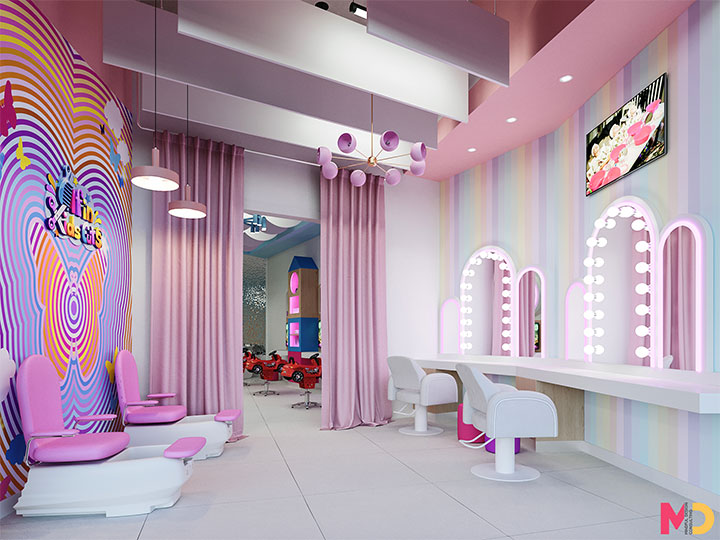
Elfin Kids Cuts hair salon by Mindful Design Consulting.
Mindful Design Consulting is a commercial interior design and branding studio specializing in franchise and multi-location brand expansion. We help growing brands create scalable, consistent, and emotionally engaging environments rooted in the psychology of design. Our work goes beyond aesthetics. We design spaces that influence how customers feel, behave, and connect with a brand.
If you are thinking to open a new business or are in the process of rebranding and remodeling your existing business, contact us to get a free consultation from Mindful Design Consulting. Click HERE to price your project design.
Also, take a look at the “Branding By Interior” e-book, the only book written on this subject at this time. It brings insight into how you can turn your business into a market-dominating competitor by using human cognitive responses.
See our Small Store Design Extravaganza: Commercial Interior Design and Branding 01 book about branding small businesses from logo design to construction, with colorful images, offering insightful explanations every step of the way.