
The First 5 Seconds — The Power of First Impressions in Restaurant Design

There is a moment, often less than five seconds, when a customer decides how they feel about your restaurant. It is not a conscious or logical decision. It is immediate, emotional, and deeply intuitive. Before they read the menu, before they taste the food, before they even sit down, they feel the space. That feeling quietly determines everything that follows, which is why first impressions in restaurant design matter so much.
As designers, beyond creating interiors, we are shaping emotional responses. The moment someone enters your business, their brain begins scanning the environment for signals. Is this place clean or chaotic? Is it worth my money? Do I belong here? Should I stay, or should I leave? These judgments happen instantly, guided by lighting, smell, layout, and the overall clarity of the space.
So, what should good design do about it?
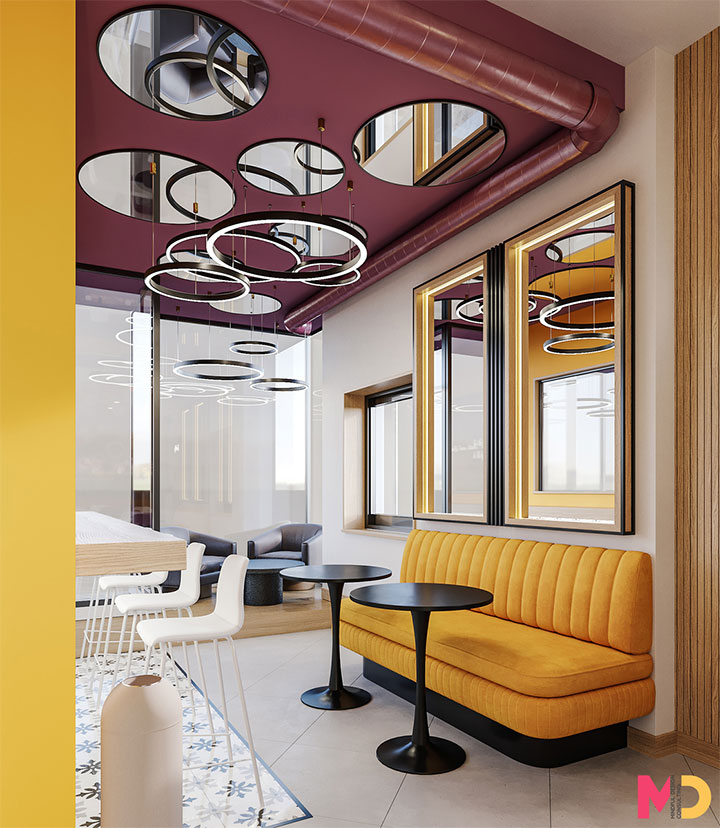
Bobaroma boba tea shop design by Mindful Design Consulting
Lighting Sets the Emotional Tone
Lighting is often the first emotional signal a customer receives. It sets the tone before anything else has a chance to. Warm, layered lighting can make a place feel comfortable and welcoming, and even more high-quality and trustworthy. It raises the perceived value of the space and encourages people to stay longer.
On the other hand, flat or overly bright lighting can feel transactional, like it’s designed for quick in-and-out visits, pushing the experience toward speed rather than enjoyment. When lighting is inconsistent or too dim, it creates discomfort and uncertainty. People may not know why they feel uneasy, but they do. A well-designed space uses lighting not just to illuminate, but to guide emotion.
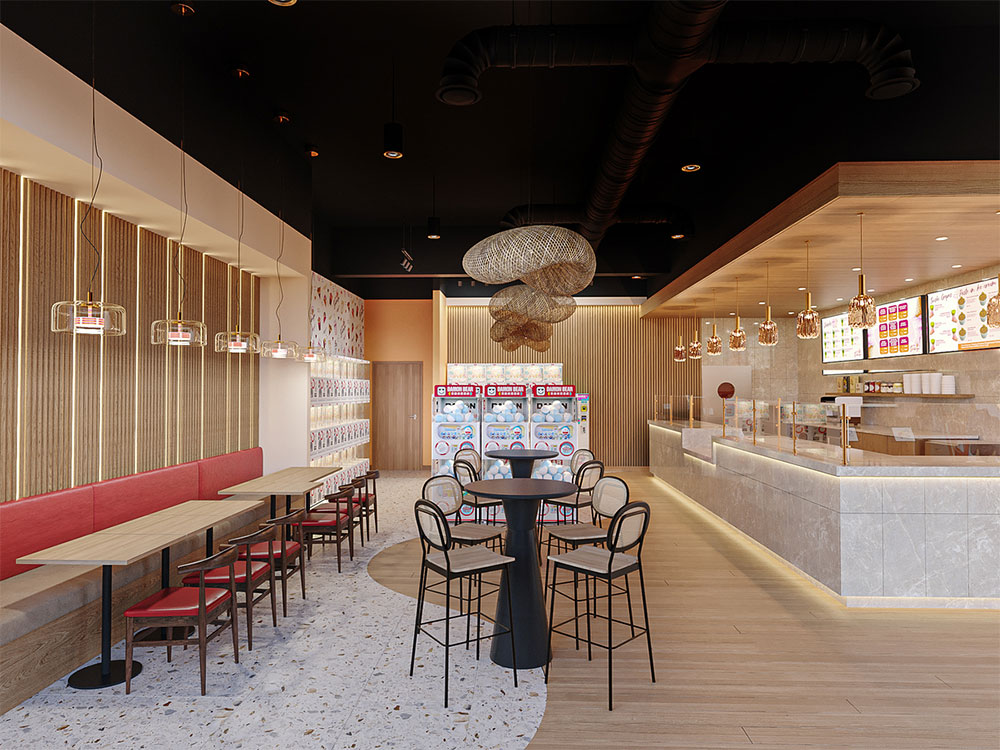
Crepe Shibuya Japanese dessert store design by Mindful Design Consulting
Smell Creates Instant Connection
Smell is just as powerful, even though it is often overlooked. It bypasses logic and connects directly to memory and emotion. The smell of fresh waffle cones, coffee, or grilled food signals life, freshness, and quality. It reassures customers before they even engage with the product.
When a space lacks this sensory layer or carries an off or neutral scent, it can create subtle resistance. People may not consciously notice it, but it affects how they feel and how long they choose to stay.

First impressions in restaurant design begin with enticing aromas.
Layout Drives Behavior
The layout is the silent driver of behavior. Within seconds of entering, a customer should understand where to go, where to order, and where to sit. When this is unclear, even for a moment, it creates friction. That friction translates into stress, and stress reduces both time spent in the space and overall spending.
A strong layout feels effortless and guides movement naturally, without forcing the customer to think. A weak layout does the opposite: it introduces hesitation, and hesitation breaks the experience.

An excellent restaurant layout that allows for smooth traffic flow.
First Impression Becomes Conversion
This is how design begins to directly impact business performance. In those first few seconds, customers are already forming impressions that shape what they do next: whether they stay, look around, buy something, or come back later. These decisions don’t come from careful thinking, but happen quickly, based on how the space feels. When a place feels clear, intentional, and welcoming, people relax and engage more easily. But if something feels off, cluttered, or confusing, it can create hesitation that’s hard to shake.
For example, a boutique café with warm lighting, clear pathways, and a few well-placed plants instantly feels inviting, encouraging guests to stay and explore. In contrast, an ice-cream shop with a cramped layout and mismatched signage can make visitors turn away before they even reach the counter. Even simple touches, like a dessert shop with a clear ordering flow, comfortable seating, and a visually appealing display, guide customers effortlessly and signal quality. By the time a customer gets to the counter, much of their decision has already been made. There’s no second chance at that first impression, so it has to work right away.

Lulu’s Ice-Cream Social ice-cream shop by Mindful Design Consulting
Spaces That Get It Right
Some of the most effective spaces get this right in very deliberate ways. You walk into a modern, health-focused restaurant, and everything signals freshness. The counter is made of pale oak, the tables are topped with white quartz, sunlight streams through floor-to-ceiling windows, and small potted herbs sit on each table. The menu boards are clean and minimal, and a display of colorful, locally sourced produce greets you as you enter. Without reading anything, you understand what the place stands for.
In a more premium setting, the feeling shifts. Velvet banquettes, dark-stained wood, and brass accents catch your eye, while layered pendant lighting casts a warm glow. A curated display of artisanal ingredients or a centerpiece dessert island invites you to linger, and soft background music enhances the sense of refinement. It encourages you to slow down and signals that the experience is meant to feel luxurious.
Even in fast, high-volume environments, the best spaces remove friction. Brightly lit counters with clear signage, open sightlines to the kitchen, numbered pickup stations, and menus displayed above the ordering area make it obvious where to go. Floor markings or simple booth layouts guide traffic effortlessly. That clarity creates comfort, and that comfort is a big part of what keeps people coming back.

Pichudo Mexican restaurant by Mindful Design Consulting
When Design Works Against the Brand
On the other hand, many restaurants that struggle or eventually close share similar spatial issues. The entrance is unclear, the lighting feels harsh or outdated, and the layout creates confusion instead of flow, like when customers have to weave between tables or search for the counter. In some cases, the space stops evolving with customer expectations and begins to feel disconnected, such as when the décor, signage, and overall vibe feel stuck in the past compared with what people now look for in a modern dining experience. The problem is not just the food or operations, but the feeling the space creates the moment someone walks in.

Outdated interior — when first impressions in restaurant design do not work.
Design Is Felt, Not Analyzed
Customers rarely stop to think about design, but rather respond to it instantly. This is the power of first impressions in restaurant design. The best spaces are carefully arranged so every element, from colors to lighting to flow, works together to guide behavior without needing explanation. The real question for any owner isn’t whether the space looks good, but whether the environment tells the story of the brand immediately. Does it feel playful, cozy, premium, or fresh?
That story is what customers experience before they taste a single bite, and it drives how they interact with the restaurant from the very first step: how long they stay, how comfortable they feel spending money, and whether they’ll return.

Hey!FroYo frozen dessert shop by Mindful Design Consulting
If you are thinking to open a new business or are in the process of rebranding and remodeling your existing business, contact us to get a free consultation from Mindful Design Consulting. Click HERE to price your project design.
Also, take a look at the “Branding By Interior” e-book, the only book written on this subject at this time. It brings insight into how you can turn your business into a market-dominating competitor by using human cognitive responses.
See our Small Store Design Extravaganza: Commercial Interior Design and Branding 01 book about branding small businesses from logo design to construction, with colorful images, offering insightful explanations every step of the way.