
Who is Your Target Market? The Biggest Mistakes Companies Make
When starting a business—especially in the competitive field of restaurants and dessert shops—there’s one question that should guide your branding, design, and marketing strategy from day one: Who is your target market? Unfortunately, this simple question is also one of the most commonly overlooked, leading to costly mistakes that many businesses don’t recover from. Here are a few tips to help you address this essential part of your business strategy.
 The Most Common Mistake: Trying to Be for Everyone
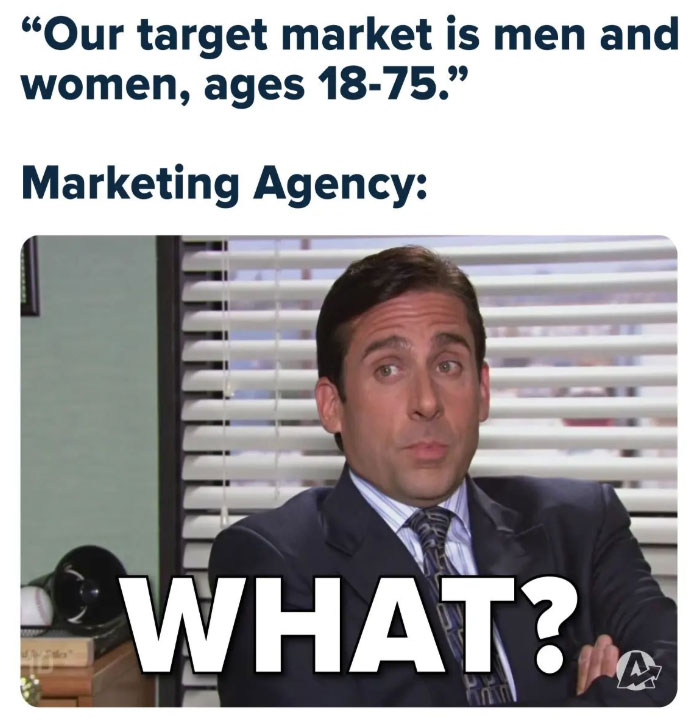
One of the largest mistakes companies make is attempting to appeal to everyone. We hear it all the time: “We want our place to work for all ages,” or “This shop should attract kids, teens, families, and older adults.” On paper, this might sound like a great idea. After all, casting a wide net should bring in more customers, right?
Wrong.
When you try to speak to everyone, you end up connecting with no one. Your brand loses focus, your messaging becomes generic, and your space lacks personality. In the end, you get lost in a sea of competitors who have defined identities and stronger emotional connections with their audiences.
Why Specific Targeting Matters—Even in Food & Beverage
Restaurants and dessert shops are no exception to this rule. In fact, they are among the most saturated industries, especially with the rise of social media and fast-moving food trends. The businesses that stand out are those with a clear voice, a distinct visual identity, and a laser-focused customer base.
Your target market influences everything:
- Your menu offerings
- Your interior design style
- Your pricing strategy
- Your branding and logo
- Your marketing channels and tone of voice
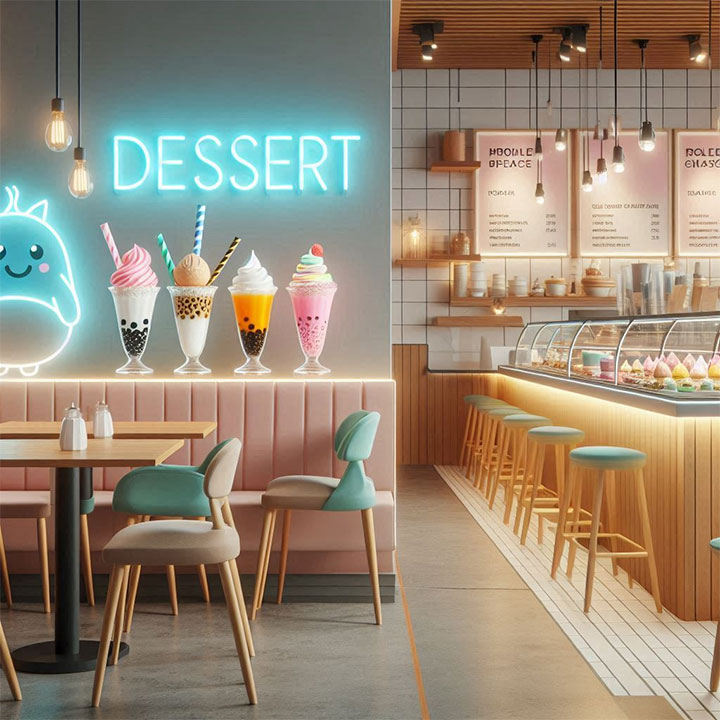
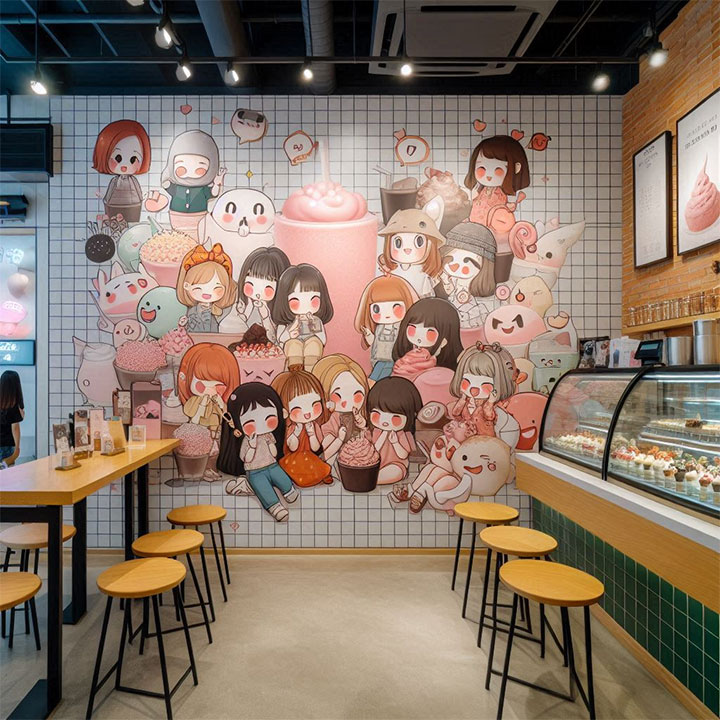
For example, a dessert shop targeting trendy Gen Z customers might use neon signage, minimalistic furniture, pastel color palettes, and Instagrammable dessert items like boba floats or rolled ice cream. Their social media will be fast-paced, casual, and visually rich.
Compare that to a shop targeting young families. The space might have brighter lighting, comfortable seating, high chairs, more traditional dessert offerings, and a friendly mascot for branding. The marketing will focus on family time, kids’ promotions, and trust.
Both approaches are valid—but trying to do both in one space creates confusion.

Scoops La Jolla dessert store by Mindful Design Consulting
Other Customers Will Still Come
Here’s something business owners often forget: Just because you target one audience doesn’t mean others won’t come.
If your concept is clear and inviting, people outside your primary demographic will still show up. In fact, they may even be drawn in by the clarity and uniqueness of your branding.
Think of Starbucks. Their target market isn’t everyone—they focus on young professionals and urban coffee lovers. But that hasn’t stopped teens, retirees, or busy parents from becoming loyal customers.

Lulu’s Ice-Cream Social by Mindful Design Consulting
Disappearing in a Sea of Competition
In today’s saturated market, not knowing your audience is a fast track to being ignored. There are thousands of restaurants, cafés, and dessert shops in every city—why should someone choose yours?
A strong, specific target market helps you:
- Stand out from competitors
- Build emotional connection with customers
- Create consistent branding and design
- Focus your marketing dollars for better ROI
- Design a physical space that supports the customer journey

La Michoacana dessert store by Mindful Design Consulting
The Takeaway
Be bold and define your audience. Whether you’re opening a boutique ice cream shop, a cozy café, or a fast-casual restaurant, make a conscious decision about who you’re trying to serve—and build everything around that.
Need help crafting a brand and interior that speaks directly to your target market? At Mindful Design Consulting, we specialize in creating immersive, on-brand experiences that help your business connect with the right customers—and keep them coming back. Let’s talk. Your audience is waiting.

Also, take a look at the “Branding By Interior” e-book, the only book written on this subject at this time. It brings insight into how you can turn your business into a market-dominating competitor by using human cognitive responses.
See our Small Store Design Extravaganza: Commercial Interior Design and Branding 01 book about branding small businesses from logo design to construction, with colorful images, offering insightful explanations every step of the way.