
Spaces That Open — The Power of Commercial Glass Garage Doors
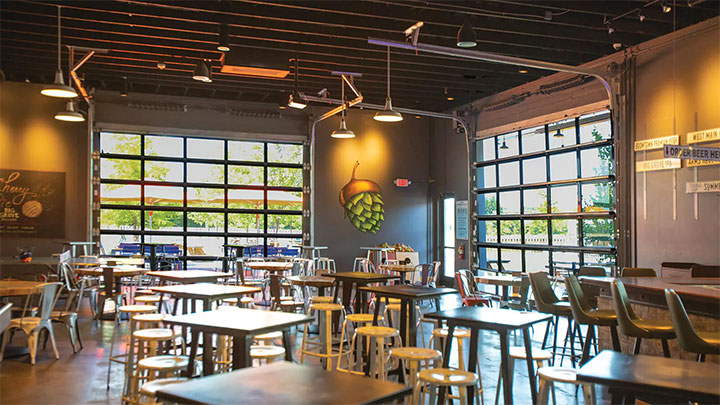
Design trends tend to swing wildly. One decade it’s all earth tones and shag carpet, and the next everything turns grayscale and industrial. Most of it comes and goes, but every once in a while something lands that actually sticks. Commercial glass garage doors are one of those rare holdovers. They’ve made the leap from car shops and loading bays into cafés, lofts, studios, offices, breweries, and showrooms—and somehow, they feel right at home.
Photo above: Aluminum Glass Garage Doors from Overhead Door Company of Northwest Indiana
At first, the idea can sound a little unexpected. A garage door? Even inside? But the combination of steel frames, clean glass, and roll-up functionality turns these doors into more than a background feature. They shape the environment itself, changing how it feels, how it functions, and how it flows. A static wall becomes a flexible opening. A dark room suddenly feels open and full of light. People notice the shift immediately, even if they can’t quite put their finger on why it feels so much better.
But it’s not just about appearance; these doors earn their place. Built to last and meant to be used, not just admired, they can open a café directly to the sidewalk on a nice day or divide a conference room when focus is needed without full isolation. It’s practicality paired with presence, with form and function working together instead of competing.
So, why consider commercial glass garage doors? Here’s why they make a real difference.

Light Changes Behavior
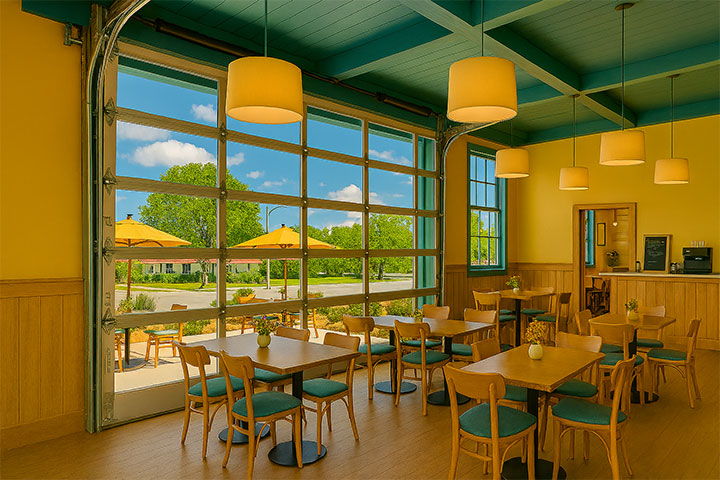
Natural light not only makes a space look good, but it also changes how people act inside it. When daylight pours in through a commercial glass garage door, rooms feel calmer, more welcoming, and somehow more honest. Customers linger longer, and conversations stretch. Spaces feel less transactional and more lived in.
Transparency matters too. When people can see movement, light, and activity beyond the door, they feel connected rather than confined. It removes that subtle barrier traditional walls create, even when it goes unnoticed. Instead of stepping into a sealed box, visitors enter an area that feels open to the world around it. That shift alone can quietly improve the customer experience without changing a single table or fixture.
Visibility Boosts Retail
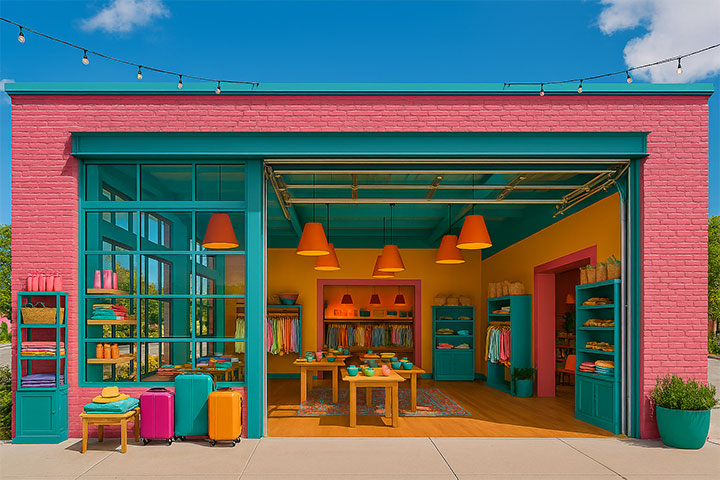
In retail, being seen is half the battle. A commercial glass garage door acts like a living display window—one that can open, shift, and invite people in rather than just asking them to look.
When passersby can see movement inside a store—customers browsing, staff rearranging displays, light changing throughout the day—it creates curiosity. That visual access lowers the psychological barrier to entry. People don’t have to wonder what’s inside; they already know.
For brands that rely on atmosphere as much as product, this transparency reinforces identity. It signals confidence. It says, we’re open, we’re active, and we’re worth stepping into.
Smart About Energy and Sound
There’s a common assumption that glass equals inefficiency, but modern commercial overhead doors are smarter than they look. Insulated frames, thermal breaks, and high-performance glazing do real work behind the scenes, helping regulate interior temperatures even when the door is a major visual feature.
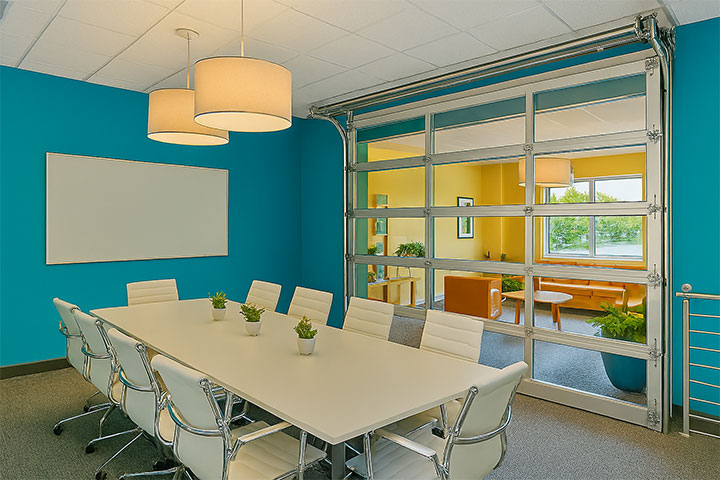
Acoustics matter too. In offices, gyms, or restaurants, the ability to close a space without fully cutting it off is valuable. Sound can be softened without killing the openness. Focus can return without isolating people behind drywall.
It’s not perfect—nothing mechanical ever is—but when designed properly, these doors balance light, sound, and temperature far better than most people expect. The result is a space that feels open without paying the penalty for it.
Restaurants Breathe
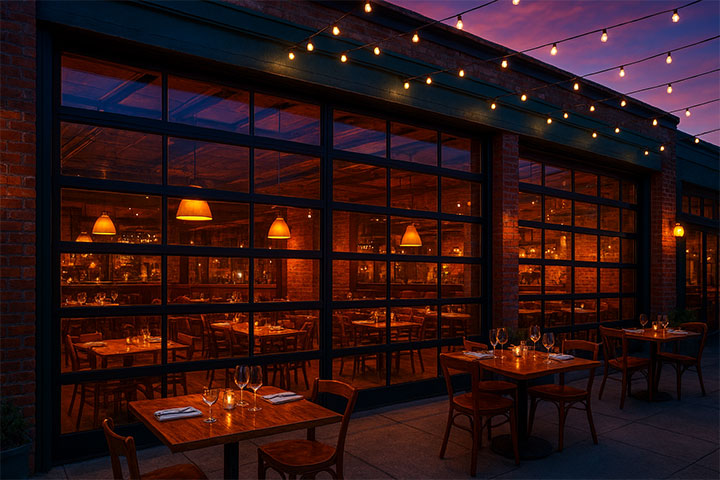
If there’s one industry that’s fully embraced these doors, it’s restaurants—and for good reason. Diners don’t want to choose between indoors or outdoors anymore. They want both, depending on the moment.
A rolled-up door turns a dining room into a patio without requiring extra square footage. Lunch service might be fully open and airy; dinner can be cozy and enclosed if the temperature drops. Private events become easier to host. Noise can be managed. Sections can open or close as needed without the awkwardness of rope barriers or temporary walls.
It’s flexible zoning without the friction. Instead of committing to a single layout, restaurants get to respond to weather, crowds, and energy in real time—and guests feel that responsiveness immediately.
Spaces Move With People
The biggest shift in interior design over the past few years isn’t about color palettes or furniture; it’s adaptability. Environments have to move with people. Workplaces need to expand, contract, and flex.
Restaurants pivot from lunch rush to event mode. Retail stores rotate displays weekly. Everyone wants more from the same footprint.
Commercial glass garage doors meet that need. Rolled up, they erase the line between areas. Rolled down, they define new boundaries. And they do it with almost no footprint, with no heavy walls to slide and no panels to stack, just one vertical movement that clears the way or closes it.
There’s something deeply satisfying about how clean it feels. No hinges, no doors swinging awkwardly into someone’s table. Just a smooth lift. And because most doors use tempered glass, they feel solid without feeling heavy, airy without being cold. That balance is hard to achieve with other materials.

Imperfect, but Impactful
These doors aren’t magic; they require maintenance. Tracks collect dust, motors wear down, and glass shows fingerprints. Over time, panels might need adjustment or hardware may need tightening, but these are all manageable issues. Like any mechanical system, things go wrong sometimes. It’s not a flaw, but simply the cost of having something highly useful and highly visible.
What matters more is how much these doors change the feel of a space. When they’re open, they bring motion, light, and connection. When they’re closed, the area still feels open because the eye moves through the glass.
They also give people something to talk about. Customers notice, clients remember. The space becomes not just functional, but memorable, which matters more than most people realize.

Great Adaptability
Commercial glass garage doors make sense in plenty of environments. Breweries that open onto patios, cafés on corner lots with unpredictable weather, creative offices where teams grow and shift weekly, gyms that benefit from fresh summer air, and showrooms that want to showcase inventory without interrupting the flow.
The key isn’t to force it. The best use comes from observing how a space already functions and finding the spot where movement transforms everything. It might be letting in more light, creating a new path, improving sightlines, or saving space. In nearly every case, the door adds real value.

Flexible Spaces for the Future
There’s a trend hiding in plain sight across modern architecture: We’re designing fewer static rooms and more adaptable environments. Commercial glass garage doors are a very literal expression of that shift, giving buildings a kind of elasticity, with spaces that can stretch or shrink depending on the day, the crowd, or the weather.
As commercial real estate continues to evolve, especially in cities, every square foot counts. When one design choice can make a space more flexible, more welcoming, and more functional for multiple uses, it is a smart investment. And it certainly does not hurt that it looks stunning too.
Trends come and go, but this one feels built to last, not just because it is beautiful, but because it works. Not always perfectly and not without effort, but in a way that earns its place in the room. In a world full of static walls, a door that moves with you just feels right.

Reliable Performance
The reality is there’s more to it than swapping out a wall. These doors require structure, tracks, power, and proper weather protection, and installation is rarely a DIY project. Still, when everything is done right, they perform exceptionally well.
That’s where experience comes in. A commercial overhead door provider who specializes in integrating functional elements into profitable design experiences can take a raw idea and turn it into something that actually works. It’s one thing to want flexibility in a space; it’s another to make sure a door aligns with HVAC zones, meets safety codes, and doesn’t rattle every time someone walks by. The right team makes sure form doesn’t undermine function. They plan for real use, match materials, and conceal mechanisms so nothing feels forced or out of place. When the project is complete, the door operates smoothly and looks like it’s always belonged there.
That’s the difference between good design and great design. The big, moving element doesn’t feel tacked on or disruptive. It feels integrated, intentional, and fully part of the space.

Maximize Your Space’s Potential
More businesses are ditching traditional walls in favor of flexibility. One area that does five things is better than five areas that only serve one, because it saves money, invites foot traffic, and feels more alive overall. The post-pandemic world pushed that shift faster, and now clients want air, light, and movement. Nobody wants to feel boxed in.
Commercial glass garage doors slide up, let in light, and stay out of the way when they’re open. They’re one of the few architectural choices that combine a real structural element with a vibe. The transparency connects inside and out, or ties together different parts of one large space without making it feel chopped up.
You’ll see them in places you might not expect—boutique hotels, pop-up shops, modern homes, even a yoga studio tucked into a warehouse district that suddenly feels upscale. They are highly functional. Heating and cooling zones can shift. Seating can double. Whole walls can roll up, and just like that, a private event becomes an open-air reception.
Designers have leaned into it because it works. It’s become a move that delivers real payoff, especially in commercial design where space has to work hard and feel branded without being over-designed.

Doors for Every Setting
Commercial glass garage doors are often the first choice for adding light, openness, and style to a space—but sometimes glass isn’t the right fit. Maybe privacy, security, or insulation needs are higher priorities. The good news? There are plenty of other roll-up door options to match your project.
- Aluminum Glass: Ideal when you still want light and visual access, with a sleek, modern look.
- Sectional Steel: Flexible panels, insulated or standard, let you customize for performance, security, or design requirements.
- Counter Doors: Perfect for commercial, retail, or corporate spaces, offering metal or wood curtains and fully integrated frames and sills.
- Security Grilles: Durable, reliable, and easy to operate, made from aluminum, stainless, or galvanized steel, with optional electric motors.
Whether your space calls for glass or another material, there’s a door that fits—letting you balance style, functionality, and practical needs without compromise.

Rolling Counter Commercial Door from Overhead Door Company of Northwest Indiana
If you are thinking to open a new business or are in the process of rebranding and remodeling your existing business, contact us to get a free consultation from Mindful Design Consulting. Click HERE to price your project design.
Also, take a look at the “Branding By Interior” e-book, the only book written on this subject at this time. It brings insight into how you can turn your business into a market-dominating competitor by using human cognitive responses.
See our Small Store Design Extravaganza: Commercial Interior Design and Branding 01 book about branding small businesses from logo design to construction, with colorful images, offering insightful explanations every step of the way.